
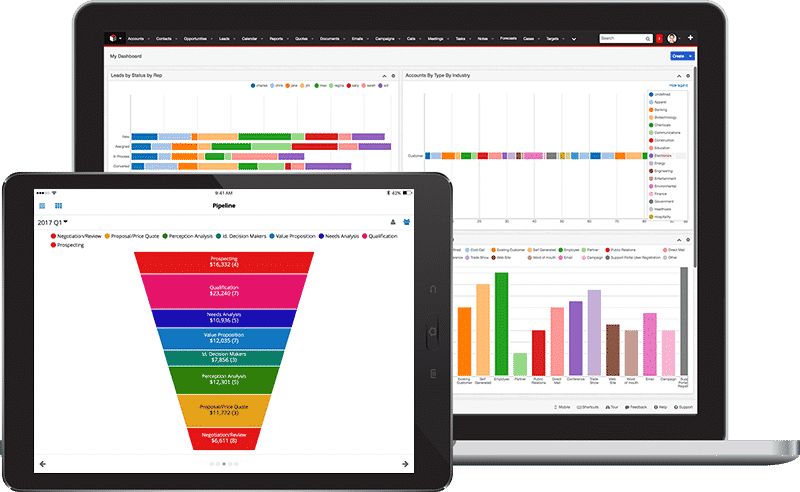
SugarCRM now presents its platform around B2B growth, precision selling and AI-supported guidance. For teams evaluating it in 2026, the important question is not how many AI labels appear in a demo, but whether customer, product and sales data can support reliable next actions.
Where SugarCRM fits
Sugar Sell supports sales automation, account and opportunity management, forecasting, guided processes and mobile access. Sugar’s wider portfolio includes marketing, service and revenue intelligence capabilities. The platform emphasizes configurable workflows and connections between CRM and ERP information.
AI depends on complete signals
Predictive guidance, summaries and recommended actions need consistent account structures, stages, activities and product context. If field teams delay updates or event contacts arrive as duplicates, the resulting analysis will be incomplete.
An AI-ready mobile capture workflow
- Scan or enter the contact near the point of interaction.
- Verify identity fields before submission.
- Map the record to the correct account, owner and source.
- Add factual meeting context and a dated next action.
- Apply duplicate rules before creating a new record.
- Use AI for a summary or draft only after the data is verified.
Governance questions
Confirm which Sugar products and plans provide each intelligence feature, what data is processed, how permissions apply and whether generated content is retained. Keep human approval for external communication and high-impact changes.
Frequently asked questions
Can AI compensate for incomplete CRM activity?
No. It may summarize what exists, but it cannot reliably reconstruct missing customer interactions.
Does ERP integration matter?
It can be important for B2B organizations that need product, order and account context alongside sales activity.
What should a pilot measure?
Measure data completeness, time to next action, seller adoption and whether guidance improves a defined decision.
Official reference: SugarCRM platform overview.